

You’re juggling work, family, a house, maybe aging parents and, suddenly, you feel your body is also changing. Sleep is lighter, recovery is slower. But did you know that there’s one piece of equipment that can help you start feeling like new again? And that it is a cast-iron ball with a handle?
Kettlebell training can be a practical answer to a real biological shift

What’s happening to your body
A 2026 review found that, compared with premenopausal women measured by DXA scan, lean muscle mass was about 2,5% lower in perimenopause and 5,7% after menopause itself. Let’s remind ourselves also that, as estrogen keeps falling, so does the bone density as well.
Wendy Kohrt, exercise scientist at the University of Colorado also notes that this life stage can trigger a biological pull towards being more sedentary, arriving at the same time as faster bone and muscle loss. In other words, your body is losing strength just when it feels least like training.
Researchers explain that aging tends to hit the muscle fibers that produce power first, so the real-life effects are bigger than the muscle loss alone would suggest.
Strength training is non-negotiable
A Mayo Clinic women’s health expert says putting stress on bones during and after perimenopause can increase bone density and lower osteoporosis risk, building your resistance up gradually.
Women’s heart health is also at risk during perimenopause due to the lack of estrogen.
Why the kettlebell is the perfect “all-in-one”
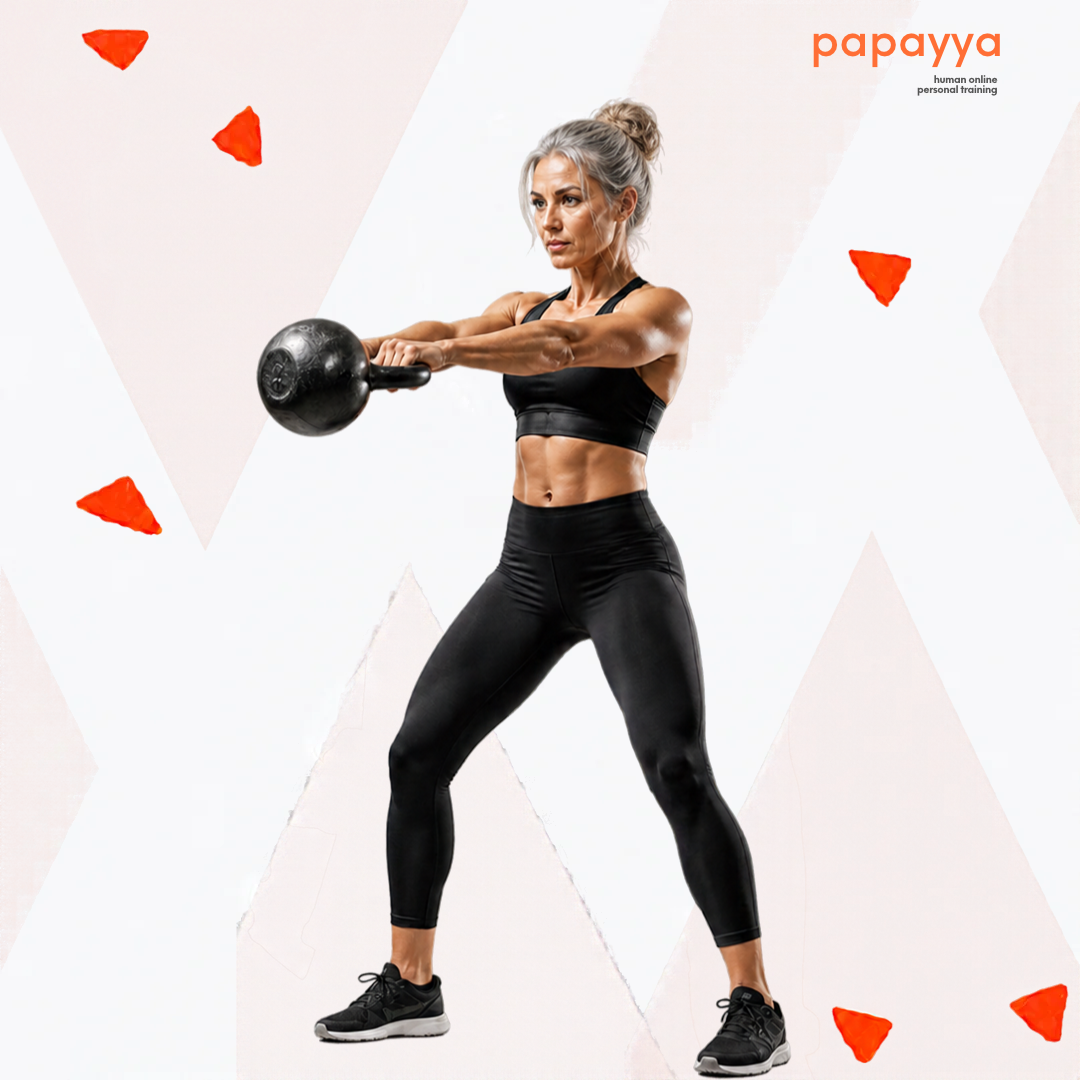
At the heart of kettlebell training is the hip hinge, which is pushing your hips back while keeping your back flat. StrongFirst describes the hinge as both the safest way to bend and the strongest movement we can make. The swing is also like a jump that never leaves the ground, so you get the power benefits of jumping without the joint impact of landing.
Kettlebell athletes typically reach around 90% of their maximum heart rate during the swings, which makes it a good strength and metabolic tool. It also helps you build power without requiring heavy equipment to create a strong training effect.
It is, at last, important to mention that this is actually supported by science. In a trial conducted to 33 women aged from 65 to 75 with sarcopenia and given a kettlebell training program showed improved sarcopenia index, grip strength, back strength and lung function, after just 4 weeks of training.
How to start safely
- Choose the right bell
- An RKC Team leader recommends that women start with an 8kg (18lbs) kettlebell at minimum and advises beginners to find a certified instructor from a well-respected organisation.
- Learn the hinge, then the swing
- Practice the hinge with no weight first, keeping your back flat and pushing your hips back as if closing a car door with your bottom. Knees must keep bent at least 15º for the glutes to engage.
- Respect your body
- Clinicians have flagged that kettlebell training in older adults may carry risks such as muscle strains, osteoporotic fractures, cardiovascular events and pelvic organ prolapse in women. Encouragingly, BELL researchers concluded that kettlebell training does not seem to carry a higher risk for older adults than the other forms of strength training under similar conditions.

Train smarter with Papayya
Supervision matters. Bell researchers believed that frequent supervised training and personalised programming in the first six weeks were key to making it safe and effective and this is where Papayya can come in. You get personalized live 1-on-1 video sessions with a certified personal trainer guiding you anytime, anywhere.
The Bottom Line
Kettlebell training for women is one of the most efficient ways to protect muscle, bone, heart and independence, using one simple tool in less time than most workouts. Start light, learn the hinge, get good coaching and build lasting power.
FAQ
Is kettlebell training good for women over 40?
Yes. Kettlebells combine strength, power and cardio in one tool, which directly targets the muscle and bone losses that speed up during the menopause transition.
Will kettlebells make me bulky?
No. Building muscle size takes years of targeted training and nutrition. Kettlebell training builds strength, power and lean mass that support everyday function.
How often should I train?
Two to three sessions of around 30 minutes per week is a solid point to start.
Can I do kettlebell training at home?
One kettlebell and a small space are enough, ideally with a coach to check your technique in the beginning.

 FACEBOOK


