.svg)

.webp)
For decades and decades, the fitness world forced us to constantly pick a side when exercising. On one side, there’s the bodybuilding enthusiasts: people that focus on lifting heavy, building muscle and treating cardiovascular exercise as a threat to their progress. And on the other side, the endurance addicts, focused only on tracking miles, optimizing their VO2 and avoiding heavy weights at all costs.
However, is it really necessary to choose? Why can’t you have the endurance of an ultramarathonist and the strength of a bodybuilder? Or what if your focus is to make sure you carry your groceries up the stairs without needing to pause in the middle of it?
Enter hybrid training. One of the latest innovations in the fitness industry and in the way we view long-term health.
%20(1).png)
The Death of the "Cardio Kills Gains" Myth
One of the biggest hesitations of this method is if one type of workout cancels the other, known as interference effect.
Well, this may be true when we’re talking about specific professional sports, however, it doesn’t apply to people looking for optimal, real-world health.
In fact, modern science proves that you actually need both to maintain your physical abilities for longer.
A research published in Nature Medicine highlights that combining muscle-strengthening elements with cardiovascular activity yields the most significant improvements in longevity, insulin sensitivity and cellular health. The studies show that even short, high-intensity periods of aerobic movement combined with resistance training can lower all-cause mortality compared to doing one or the other.
Philosophy of the Hybrid Athlete
To understand hybrid training, we need to understand its source. And its source is Alex Viada, author of The Hybrid Athlete. The coach and bestselling author proved that the human body is capable of constant adaptation, managing to build elite-level power and extreme endurance simultaneously.
Viada’s method focuses on systemic fatigue. According to the author, “most hybrid programs fail because people try to follow a 100% intense lifting program and 100% intense running program simultaneously. That’s not hybrid training; that’s just a recipe for injury”
However, your program needs to acknowledge that your body only has one “stress bucket. Balance the programs so that you don’t drain yourself completely. Remember that if you did an extreme and heavy leg day, you can’t expect to make a long run the next day.
👉Try Papayya’s FREE 14-day trial right now!
.png)
Structure a Balance Routine: The High-Low Approach
This method is focused on clustering your highest-intensity efforts on the same day, so you can allow yourself 48 hours of complete, systemic recovery afterward.
Here’s how you can map out your hybrid training schedule:
Separate your Stressors
If you’ve focused on a demanding lower-body strength session, pair it with either a complete rest or a very low-intensity cardio session (called Zone 2 cardio) later that day or the next. Avoid putting on a hard cardio workout the day before a demanding lifting session.
Prioritize Movement Quality instead of Volume
A focused 30 to 45-minute session that combines compound movements (such as squats, presses or rows) with targeted cardiovascular intervals is highly effective.
Keep a Balanced Weekly Structure
- Monday (High Intensity): Upper Body Strength + Short, Intense Cardio Intervals
- Tuesday (Low Intensity): Conversational Cardio (brisk walk or steady cycling) + Active Mobility Work
- Wednesday (High Intensity): Lower Body Strength & Core Stability
- Thursday (Recovery): Full Rest or Active Recovery (Yoga / Posture work)
- Friday (Moderate Intensity): Full Body Functional Movement & Steady Cardio
- Saturday & Sunday: Outdoor activities, family time, or complete rest
This is what a sustainable layout should look like.
Make Hybrid Training Work for your Lifestyle
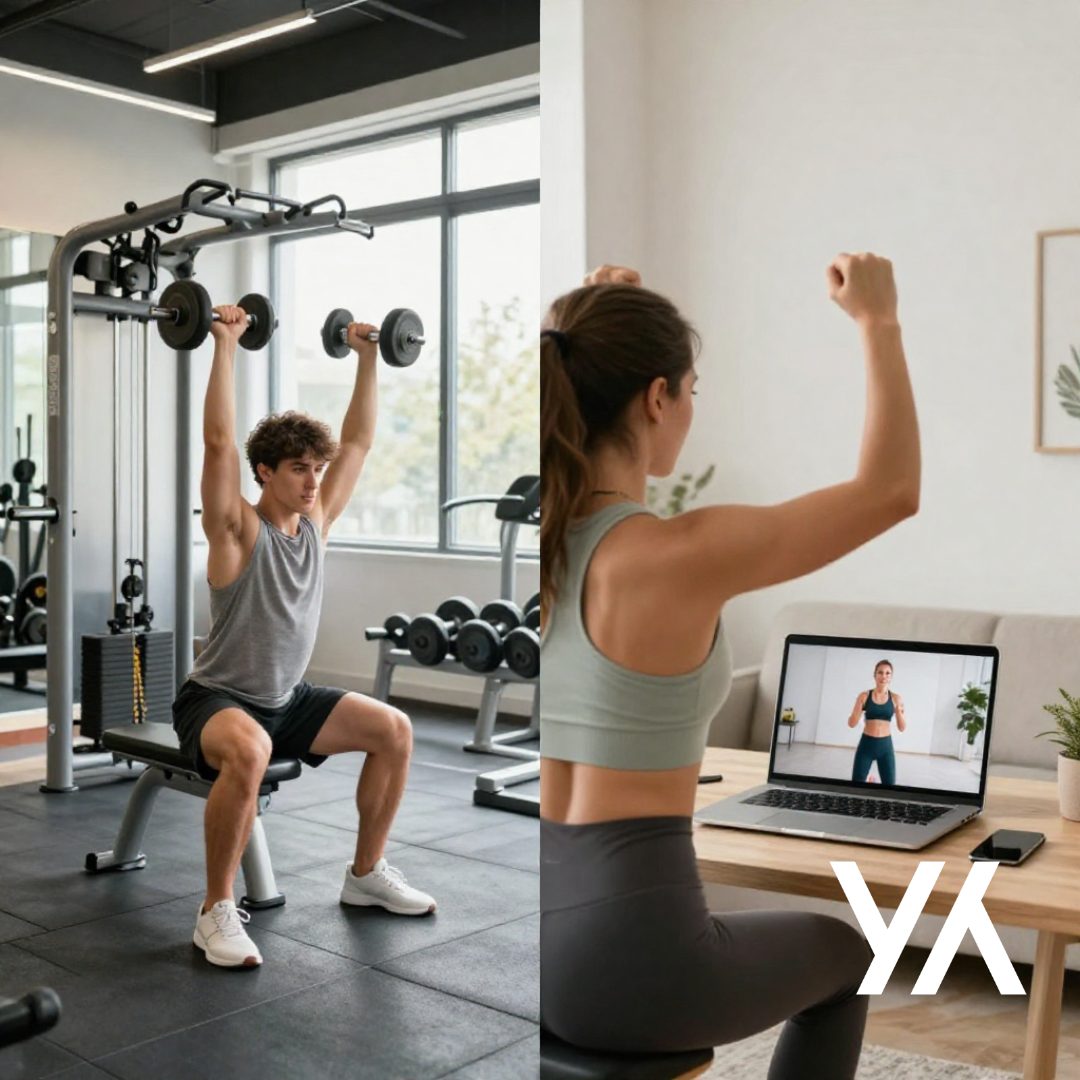
The beauty of hybrid training is its flexibility. It doesn’t require a gym or specialized equipment. With just a pair of dumbbells, a resistance band and an open space are often more than enough to build a highly functional, athletic frame.
At Papayya, our mission centers exactly in this mix of science, simplicity and safety. A fit and active life doesn’t need to mean extreme restrictions or choosing between being strong or being fast. Our intention is for you to allow yourself to move freely, safely and confidently throughout your daily routine.
By using real-time feedback, focused on proper form and on respecting each body’s limits, you can easily bridge the gap that exists between strength and stamina, ensuring that your fitness routine supports your health for the long-term.

 FACEBOOK


